
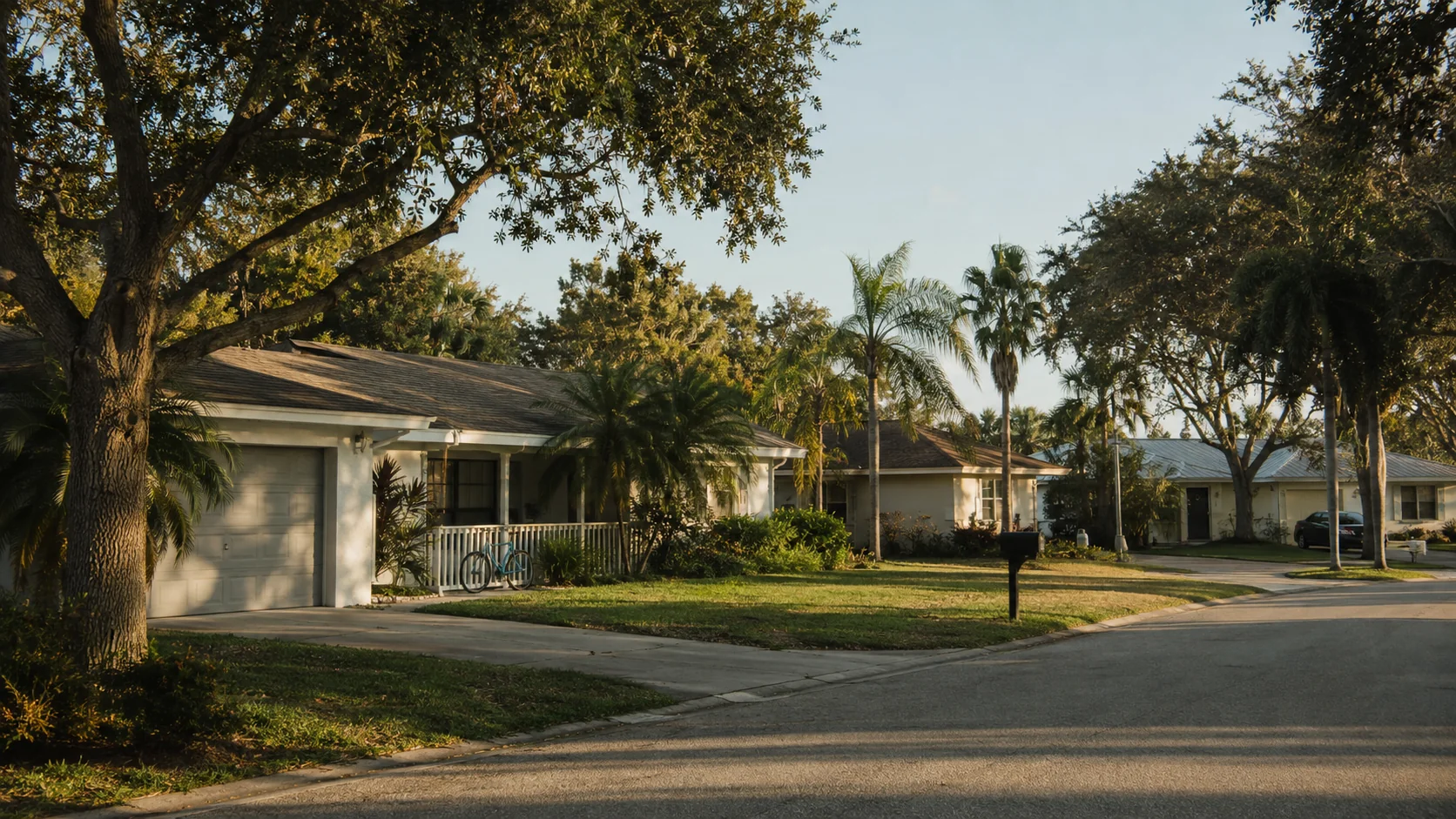
Living in Panama City Beach, FL
What it's actually like to live in Panama City Beach year-round, for people considering a full-time move rather than a vacation home — cost of living, schools, hurricane season, and how the corridor's different areas suit different lifestyles.
Cost of Living & Taxes
Florida has no state income tax, which meaningfully changes the math for residents relocating from a state that does. Computed directly from this site's own live MLS feed rather than a canned third-party estimate, the median sold price across the Panama City Beach corridor over the trailing 12 months is $415,000, and the median list price across every home currently for sale is $447,500. Prices have cooled substantially from the 2022 peak (median list price ran closer to $560,000 at the height of that market, per a NAR RPR pull). Day-to-day cost of living outside of housing runs close to national averages, with insurance being the notable exception (see below).
Market figures updated: 2026-09-24Schools
The area is served by Bay District Schools. Several communities on this site sit close enough to the beach-side schools that a Hathaway Bridge commute isn't part of daily life — Breakfast Point has its own on-site K-8 charter school (Breakfast Point Academy) built into the community rather than elsewhere in the district. J.R. Arnold High School serves the beach side generally. Confirm current zoning for any specific address before treating a school as a given — boundaries shift.
Hurricane Season & Insurance
This is coastal Florida — hurricane and flood insurance are a real, ongoing budget line item, not a one-time closing cost, and lenders require them on waterfront property. Impact windows and wind-mitigation features can meaningfully reduce premiums; ask about a home's specific mitigation features, not just its listed price, when comparing options across this site's community pages.
Commute & Getting Around
Highway 98 (Front Beach Road/Back Beach Road corridors) and State Road 79 are the two main arteries connecting the beach to the inland communities — relevant context for anyone comparing a beachfront community against an inland one like Breakwater at Ward Creek. Northwest Florida Beaches International Airport (ECP) sits roughly 15–20 minutes north of the beach via SR 79. Most residents drive; a public Bayway bus system exists as a secondary option.
Year-Round Character vs. Seasonal Character
The corridor genuinely splits in character by area — the central strip handles most of the seasonal tourist volume, while the far east end (Grand Lagoon/Thomas Drive corridor: Bay Point, Venture Out, Bid-A-Wee) and far west end (Carillon Beach, Laguna Beach, Wild Heron) skew more toward long-term residents. Worth knowing if a quiet, year-round neighborhood feel is part of what you're looking for versus a more tourism-adjacent stretch.
A Few Starting Points Across Price Points & Lifestyles
Latitude Margaritaville
55+ active-adult, amenity-heavy, Hwy 79/West Bay corridor.
Breakwater at Ward Creek
New construction, gated, inland Ward Creek corridor.
Bay Point
Established, gated, mixed housing on Grand Lagoon/St. Andrews Bay, east end.
Carillon Beach
Gated, walkable, far-west beachfront.